The issue nobody talks about clearly enough
You've got a body that's changing. Maybe it's hormonal. Maybe it's from medication, stress, or just aging in a way that's completely normal and also wildly frustrating. And you're noticing that the toys or techniques that used to work feel too intense, or worse, they don't feel like much of anything at all.
Here's the thing: you're not broken. Your tissue is just different now, and most vibrators on the market were designed for bodies that don't match yours anymore.
What actually happens to sensitive tissue
When estrogen drops, vaginal and clitoral tissue becomes thinner. The outermost layer (the epithelium) literally shrinks. There's less blood flow, which means arousal takes longer to build. The tissue is also more prone to micro-tears from friction, which is why standard vibrators can feel uncomfortable or even painful.
But here's what doesn't change: nerve density. Your clitoris has 8,000 nerve endings, and hormones don't touch that. The problem isn't the wiring. It's that conventional vibrators rely on direct friction, which requires either thicker tissue to buffer the sensation or a high pain threshold you may not have.
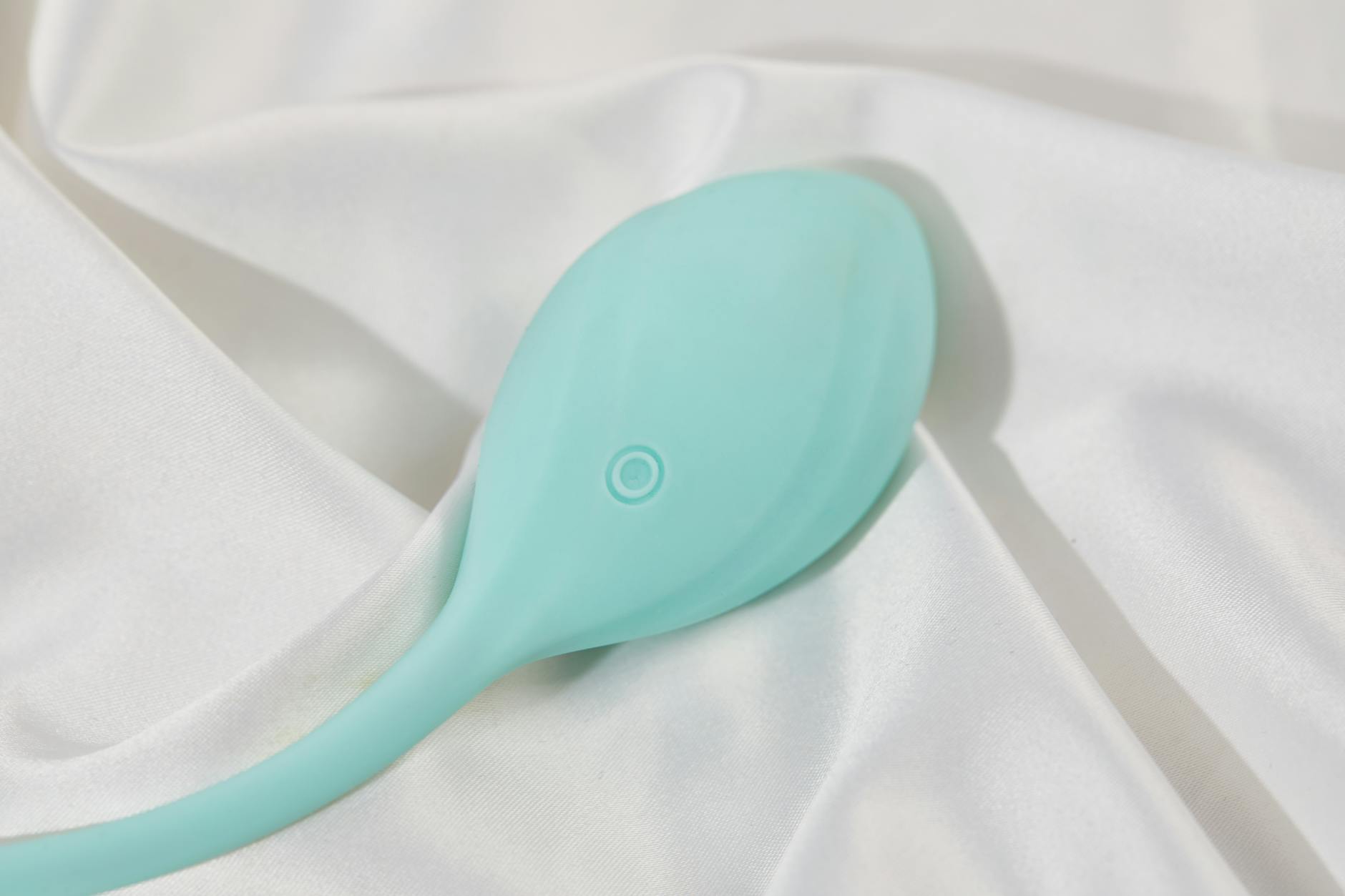
Photo by IFONNX Toys on Pexels
Why suction is biomechanically smarter
Lemon vibrators use suction technology instead of direct vibration. This matters more than you'd think. When you apply suction to the clitoral area, you're creating a gentle pressure differential that pulls blood into the tissue and stimulates the nerves without the shearing force of side-to-side or up-and-down friction.
Think of it this way: a conventional vibrator is a drummer hitting a drum. Suction is a hand gently drawing air away from the surface. Same nerve activation, completely different mechanical load on the tissue itself.
For sensitive or thinning tissue, this distinction is everything. You get intense sensation with zero friction. No micro-tears. No irritation the next day. Just nerves getting exactly what they evolved to receive.
The pattern depth advantage
Lemon clitoral vibrators like the Lem come with multiple intensity levels and wave patterns, not just "on" and "off." This means you can start at pattern 1 or 2, where the suction pulse is barely there, and work up to intensity as your body wakes up and blood flow increases.
Conventional vibrators usually start intense and get more intense. That's fine if your tissue can handle it. If it can't, you're either in discomfort or you're not using the toy at all, which defeats the purpose.
Progressive intensity isn't just comfort. It's also how you extend pleasure sessions. You can spend 20 minutes building, switching between patterns, letting sensation deepen naturally instead of chasing one fixed frequency.
How sensitive tissue responds to suction specifically
The clitoris has two main parts: the visible external glans, and the internal structures (the clitoral body and crura, which extend several inches into the pelvis). When tissue is thin or less vascularized, direct vibration often only stimulates the surface. Suction, by contrast, activates deeper nerve branches because the pressure change affects a larger tissue volume.
Clinically, this translates to people with thinning tissue reporting orgasms that feel more internal, more full-bodied, even more intense than they expected. The sensation isn't concentrated on one raw surface. It's distributed.
That's not placebo. That's anatomy meeting technology in a way that actually works.
Why other vibrators fall short for this use case
Bullet vibrators are relentless. They're high-frequency buzz with nowhere to hide. For sensitive tissue, they're often too much too fast.
Wand vibrators are broad and rumbly, which is great for many bodies, but they're still friction-based. If your tissue is thin, the contact pressure can exceed what's comfortable, even at lower settings.
App-controlled vibrators offer customization, but they're still traditional motors delivering oscillation to tissue. Better than a cheap bullet, sure. But not designed for the specific problem of tissue fragility or reduced vascularity.
Lemon vibrators are purpose-built for this problem. The suction mechanism was designed to deliver sensation without demanding thick, resilient tissue underneath it.
The lubrication factor
With lemon clitoral vibrators, you can use water-based lubricant freely without worrying about damaging the toy. Lubrication reduces friction during use, which is already low, and also helps the suction seal work more effectively.
Apply a small amount around the opening of the cup, turn on a gentle pattern, and let it work. The lube doesn't dilute the sensation. It actually enhances it by protecting your tissue and improving the seal.
For sensitive tissue, this is non-negotiable. Lubrication is your ally, not a compromise.
How to start if you're new to suction or if tissue sensitivity is new for you
Begin at the lowest intensity. Pattern 1, setting 1. You're not looking for immediate fireworks. You're looking for a sense of gentle pressure and warming sensation.
Take 10-15 minutes just getting familiar with how it feels. Your body will signal when it's ready for more stimulation. The clitoris engorges and becomes more sensitive as arousal builds, so something that felt mild at minute 2 might feel perfect at minute 10.
If you feel any discomfort, stop. Sensitivity to a toy isn't something you push through. It's information. Your tissue is telling you something. Listen.
Most people find that within 2-3 sessions, they've found their sweet spot. Maybe that's pattern 2, maybe it's pattern 5. The point is you have options, and you're working with your body instead of against it.
The partner conversation
If you're using lemon vibrators with a partner, the suction mechanism can feel different to them than a traditional vibrator. Some partners appreciate it because they can see and feel exactly what's happening. Others need a moment to adjust to the sensation.
Talking about it before you start helps. "I want to try something that feels gentler on my tissue but delivers better sensation." That's all you need to say. Most partners get it immediately.
If your partner wants to incorporate it into partnered play, suction toys work beautifully for external stimulation while they're inside you, or for solo use while you're together. How to Use Lemon Vibrators With a Partner After Long Time Apart covers this in detail if you're navigating that terrain.
When sensitivity is temporary versus structural
Sometimes tissue sensitivity comes from a specific cause. You've just stopped hormonal birth control. You're early in menopause. You're recovering from an infection or inflammation.
In those cases, lemon vibrators give you a tool to maintain pleasure while your body reorganizes. You're not waiting for sensitivity to resolve. You're building pleasure with a device that respects where you are right now.
If sensitivity is structural and ongoing, suction becomes your default pleasure technology. That's not a limitation. That's an advantage. You've found the tool that works for your body. Own it.
The sensation quality stays high
Here's what I tell my clients: suction doesn't deliver less sensation. It delivers different sensation, and for sensitive tissue, that different sensation is actually more intense because it's distributed across more nerve fiber and delivered without mechanical stress.
Many people who switch to lemon clitoral vibrators from conventional vibrators report surprise at how much pleasure they feel, despite using a lower intensity setting. That's not a coincidence. It's physics and anatomy aligning.
FAQ
Are lemon suction toys safe for sensitive or thinning tissue?
Completely safe. Suction technology doesn't create friction or shearing force, so there's no risk of micro-tears or irritation. If you're using proper water-based lubricant and starting at a gentle intensity, lemon vibrators are actually safer for sensitive tissue than friction-based toys. If you have a specific tissue condition, check with your doctor, but for general sensitivity from hormonal changes, age, or medication, suction is biomechanically ideal.
Can I use a lemon vibrator every day if my tissue is sensitive?
Yes, though "every day" depends on how your body responds. Some people use lemon vibrators daily with zero irritation. Others prefer every other day. The key is that you're not using friction that compounds, so daily use doesn't create cumulative damage the way it might with conventional vibrators. If you notice any tenderness or irritation, scale back to every other day.
What intensity should I start at with sensitive tissue?
Always start at pattern 1, setting 1. This is the gentlest suction pulse available. Let your body adjust for a few minutes, then gradually increase if you want more sensation. Many people find they need less intensity than they expected because suction sensation is more concentrated and efficient. The goal is comfort and pleasure, not proving you can handle high intensity.
Do I need special lubricant for lemon vibrators if my tissue is sensitive?
Water-based lubricant is your friend. It protects sensitive tissue, improves the seal for suction efficiency, and doesn't damage silicone. If you have tissue that's particularly dry or thin, consider a slightly thicker water-based lube or a hyaluronic acid-based option designed for sensitive mucous membranes. Avoid silicone lube, which can degrade some toy materials.
How is a lemon vibrator different from a traditional bullet if both can be gentle?
A gentle traditional vibrator still relies on oscillating friction. A lemon vibrator uses suction, which stimulates nerves via pressure change rather than movement. For sensitive tissue, this means you get intense sensation without the mechanical load. Even a "gentle" bullet vibrator concentrates force on the tissue surface. Suction distributes stimulation across a wider nerve network with zero friction. It's a fundamentally different mechanism.
Can lemon vibrators help if sensitivity is from hormonal birth control?
Yes. How to Use Lemon Vibrators After Stopping Hormonal Birth Control covers this specifically, but in short: lemon vibrators work well during the adjustment period when your body is recalibrating hormone levels and tissue response. The suction mechanism is gentle enough to work during transition periods without adding stress, and many people find sensation returns more quickly once they have a tool designed for their current physiology.
The bottom line
Sensitive tissue isn't a reason to give up pleasure. It's a reason to switch tools. Lemon vibrators were built for this exact situation: bodies where friction-based stimulation doesn't work anymore, but pleasure absolutely should.
Start low, move slow, and let suction do the work your body designed it to do. Your pleasure matters, tissue sensitivity or not.